
There are moments when compassion is expressed not through grand gestures, but through something much simpler: showing up.
Sitting beside someone who feels forgotten. Listening to their story. Sharing a meal. Offering a prayer. Providing a few essential items that make daily life a little easier. Most importantly, reminding another human being that they still matter.
It is in this spirit that the Archbishop Cyprian Kizito Lwanga Foundation (ACKLAF) continues to carry forward the legacy of His Grace, the late Archbishop Dr. Cyprian Kizito Lwanga — a legacy deeply rooted in faith, compassion, service and concern for the most vulnerable members of society.
Through its outreach to elderly people in vulnerable circumstances, the Foundation is demonstrating that caring for older persons must go beyond meeting material needs. It is also about preserving dignity, providing companionship, strengthening a sense of belonging and ensuring that those who have spent their lives contributing to their families and communities are not forgotten when they become less able to care for themselves.
Reaching the Elderly in Kyampisi Sub-County
Following an assessment that identified elderly people living in difficult circumstances in Kyampisi Sub-County, the Archbishop Cyprian Kizito Lwanga Foundation organized a charity outreach to respond to some of the urgent needs discovered within the community.
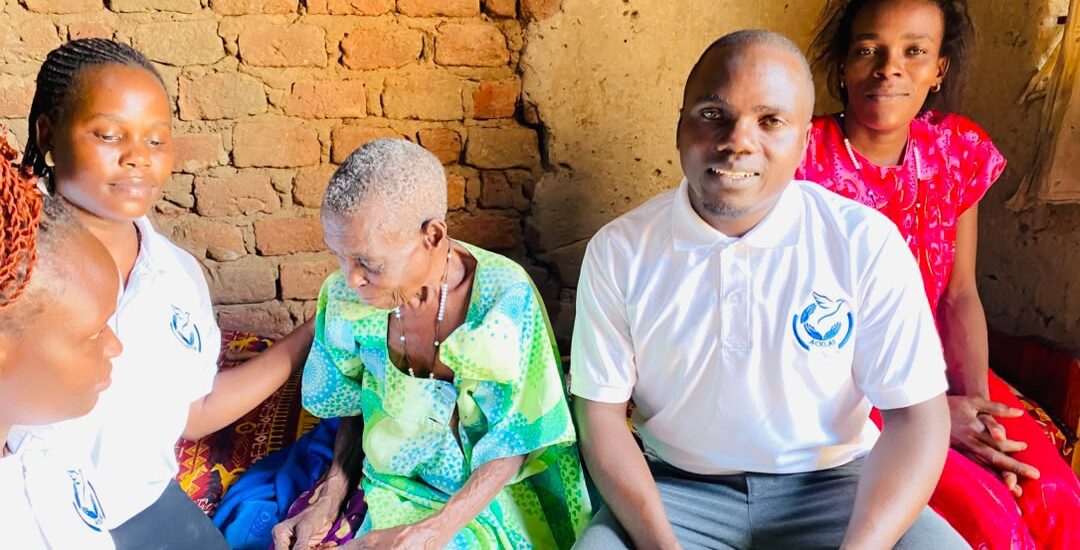
Members of the ACKLAF team visited the homes of elderly residents, taking with them essential food and household supplies intended to provide immediate relief and make everyday life more manageable.
Among those visited were two elderly women in their seventies who live alone and had been identified during the earlier assessment as requiring urgent support.
Yet the significance of the outreach went far beyond what was carried into their homes.
The team sat with them.
They listened.
They shared conversations and stories.
They prayed together.
They offered companionship.
For an elderly person living alone, these moments can be just as important as material assistance. A food package can address an immediate physical need, but a conversation can speak to loneliness. A household item can make daily life easier, while a visit can restore a person’s sense of connection to the wider community.
The gratitude expressed during the visits was therefore not simply about receiving assistance. It was also the gratitude of being remembered.
For the elderly beneficiaries, the presence of the ACKLAF team was a reminder that advancing age does not reduce a person’s worth. They remain valued members of their communities, people whose lives, experiences, wisdom and faith continue to matter.
When Growing Old Also Means Becoming Vulnerable
Growing older should be a stage of life associated with respect, security and appreciation for the years a person has given to family and society.
Unfortunately, for some elderly people, old age can also become a period of increasing vulnerability.
Reduced mobility may make it difficult to work, travel or perform ordinary household tasks. Sources of income may diminish. Children and relatives may live far away or face economic challenges of their own. Health needs may increase at the same time that access to basic necessities becomes more difficult.
For an elderly person living alone, even ordinary activities that many people take for granted can become significant challenges.
But material hardship is only part of the problem.
There is also the less visible challenge of loneliness and isolation.
An older person may have food for the day and still spend long periods without meaningful interaction. They may have a roof over their head but feel disconnected from the community around them. Some have lost spouses, friends and relatives with whom they shared much of their lives.
This is why elderly care must be understood as more than the provision of food or household necessities.
It is about human dignity.
It is about companionship.
It is about listening.
It is about ensuring that people who once cared for children, families and communities continue to experience care themselves.
Carrying Forward Archbishop Cyprian Kizito Lwanga’s Legacy
The work of the Foundation is closely connected to the values that defined the life and ministry of the late Archbishop Dr. Cyprian Kizito Lwanga.
Archbishop Lwanga’s ministry was characterized by concern for people, particularly those experiencing hardship, vulnerability or exclusion. His understanding of service was rooted in the belief that faith must be expressed through practical acts of compassion.
He walked with people.
He listened to their struggles.
He recognized the dignity of those whom society could easily overlook.
He understood that every person deserves to be seen, respected and loved.
The Archbishop Cyprian Kizito Lwanga Foundation seeks to ensure that this spirit of compassion continues to live through practical action.
The Foundation’s outreach to elderly people therefore represents more than a charitable activity. It is part of a continuing commitment to translate the values of Archbishop Lwanga into meaningful interventions within communities.
Every elderly person reached is a reminder that his legacy is not preserved only through words spoken about him, but through actions that reflect what he stood for.
Caring for the Elderly Is a Shared Responsibility
A society can often be judged by how it treats those who are most vulnerable.
This includes children, people living with disabilities, families experiencing poverty and, importantly, elderly people who may no longer have the physical or economic independence they once enjoyed.
Older people are not separate from our story.
They are part of it.
They are the parents who raised families, the grandparents who preserved traditions, the farmers who cultivated land, the workers who built institutions, the teachers who educated generations, the community members who provided guidance and the people whose sacrifices helped shape the lives enjoyed by younger generations today.
Caring for them should therefore not be viewed merely as an act of sympathy.
It is an acknowledgement of their contribution.
It is an expression of gratitude.
It is a responsibility shared by families, communities, faith institutions, civil society organizations, businesses and individuals.
This is especially important for elderly people who have limited family support or who live alone.
No person should reach old age and feel that because they can no longer work as they once did, their value to society has disappeared.
Human dignity does not retire.
More Than Giving: The Importance of Presence
One of the most powerful aspects of the ACKLAF outreach is the emphasis on personal presence.
Modern approaches to charity can sometimes become heavily focused on what is distributed: kilograms of food, household supplies, medicines or financial contributions.
These things are important and, for families experiencing hardship, they can be life-changing.
But service must never lose its human dimension.
Sometimes an elderly person needs someone to sit beside them.
Someone to ask how they are doing.
Someone willing to listen to a story they may have told before.
Someone who remembers them when the rest of the world seems busy.
Someone who prays with them.
Someone who makes them feel that they are still part of a community.
That human connection is at the heart of compassionate service.
During the Kyampisi outreach, the Foundation sought to provide both forms of support: practical assistance and human companionship.
It is this combination that turns an ordinary delivery of supplies into an encounter that can restore hope.
One Life at a Time
The challenge of supporting vulnerable elderly people is larger than any single organization, institution or outreach activity.
There will always be another home to visit.
Another elderly person living alone.
Another family struggling to provide adequate support.
Another person whose circumstances may never become visible unless someone deliberately goes looking.
But meaningful change does not always begin with solving an entire problem at once.
Sometimes it begins with one person.
One home.
One conversation.
One visit.
One act of kindness.
This philosophy lies at the heart of the Archbishop Cyprian Kizito Lwanga Foundation’s work.
The Foundation recognizes that changing communities begins by recognizing the dignity of individual people. When one elderly person receives food, companionship and reassurance, their circumstances may not be completely transformed overnight — but something important has happened.
They know that someone cares.
They know that they have not been forgotten.
And sometimes hope begins with exactly that.
Building a Culture That Remembers
The work being undertaken by ACKLAF should also serve as an invitation to the wider community.
Supporting elderly people cannot be left only to charitable organizations.
Families can check more regularly on elderly relatives.
Neighbours can visit an older person living alone.
Young people can volunteer their time.
Faith communities can identify vulnerable elderly residents within their areas.
Businesses can contribute food, household items, medical supplies or financial support.
Professionals can volunteer skills and services.
Communities can create systems through which elderly people who need assistance are identified before their situations become critical.
Every contribution matters.
And sometimes the most valuable contribution costs nothing more than time.
The goal should ultimately be to create communities in which no elderly person becomes invisible simply because they have grown older.
The Work Continues
The Kyampisi outreach is part of the continuing mission of the Archbishop Cyprian Kizito Lwanga Foundation to restore hope, demonstrate compassion and uphold human dignity.
Through such initiatives, Archbishop Lwanga’s legacy remains alive — not simply as a memory of the remarkable life he lived, but as a continuing call to serve others.
A legacy becomes most powerful when it inspires action.
For ACKLAF, that action means reaching people who may otherwise be overlooked, entering their homes with compassion, listening to their stories and responding to their needs.
It means choosing to see those whom society sometimes fails to see.
And it means reminding elderly people that they remain important, respected and loved.
The Foundation’s message is therefore both simple and profound:
Changing lives does not always require grand gestures.
It can happen one life at a time.
One home at a time.
One visit at a time.
One act of compassion at a time.
Join the Mission
The need remains significant, and the Archbishop Cyprian Kizito Lwanga Foundation cannot undertake this work alone.
Individuals, organizations, companies, faith communities and well-wishers can help the Foundation extend its reach to more elderly and vulnerable people.
Donate
Support future outreach activities by contributing towards food, essential household supplies, medical needs and other forms of assistance for vulnerable people.
Donation information is available at:
https://acklaf.org/donation/
Partner with ACKLAF
Organizations, companies, community groups and individuals interested in supporting or participating in outreach activities are encouraged to partner with the Foundation.
Contact the Foundation
Email: info@acklaf.org
Telephone: (+256) 750 555 882
Archbishop Cyprian Kizito Lwanga Foundation
“Carrying Forward a Legacy of Life in Its Fullness.”